The Game Night Host Kit
A game-night planner for picking a game that works whoever turns up, fitting the games into your evening longest first, splitting a big group into two tables, and counting how often each game on the shelf really gets played
BoardBout's Player-Count Matcher answers one headcount and the Game-Length Estimator one game. A host has harder questions: which game works if the maybes come, which games fit between the start and the stop time, and whether the group needs another game at all. The estimator also asks for minutes per player while a box prints a total, and until this kit it gave a mixed table no teach time. The Game Night Host Kit plans for the confirmed guests and the maybes together: all 12 of the matcher's games list 4 players, but only 4 list every count from 4 to 6, and it ranks those by their worst count. It turns a box's printed total into minutes a player, pays the teach whenever anyone is new, and puts the long game first: the same three games end a 7:00 to 10:30 night at 10:15 long-first and at 10:40 short-first (an example). It splits a group too big for any game into two even tables, and counts the plays a year a shelf really gets. Every figure in the pack is computed from the site's own calculators; the guest lists, boxes and shelves are labeled examples, and the planning rules of thumb are named as such. Player ranges are the base games as commonly published, no rulebook text is reproduced, and it is for social game nights only, with nothing about betting or money play. Included: 7 steps, a guest and game plan, a run sheet, a game library sheet, teach cards, a player count and box time reference and a quickstart, plus a personalised sheet worked from the numbers you entered in the calculator.
Look inside
Two full pages from the pack, exactly as printed. Click either to read it at full size before you decide.
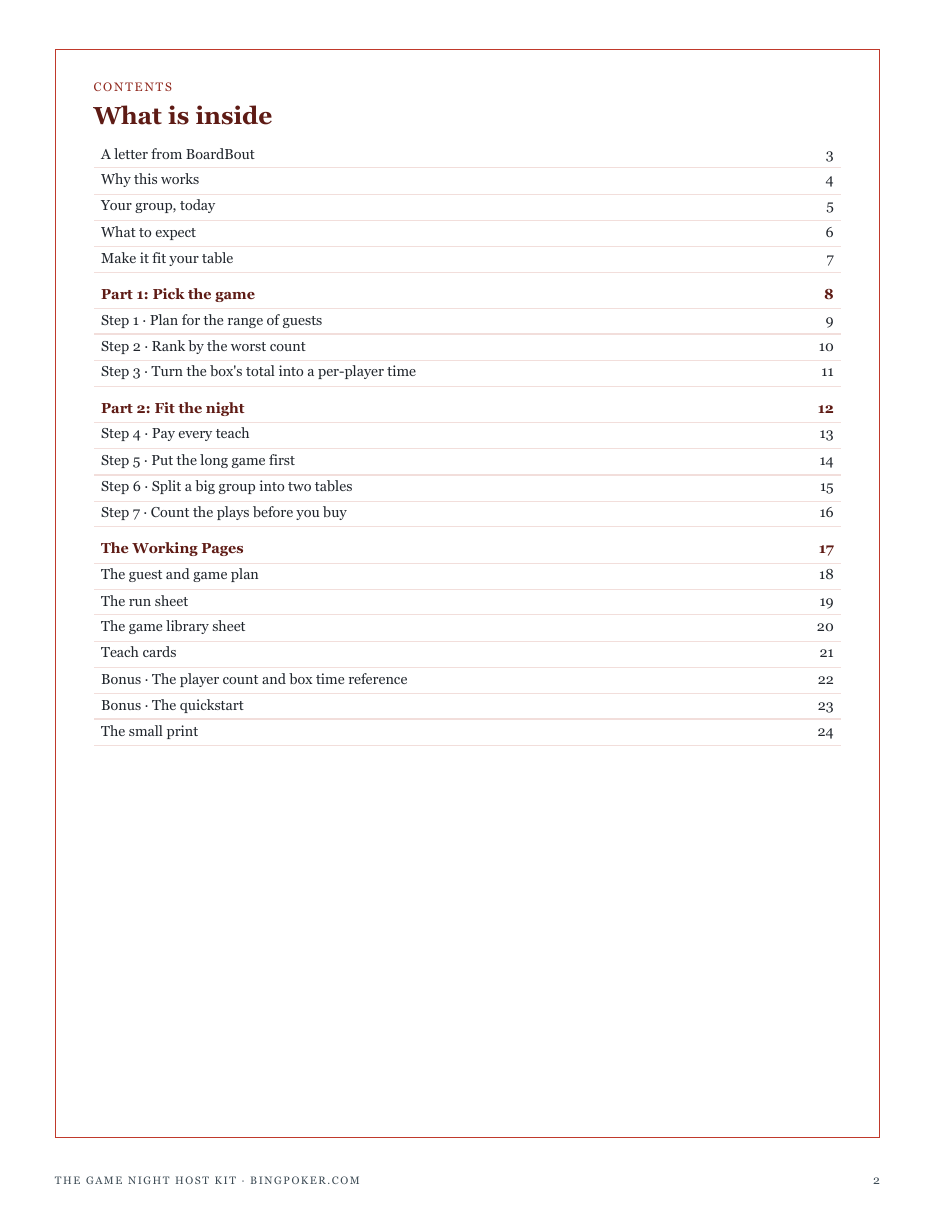
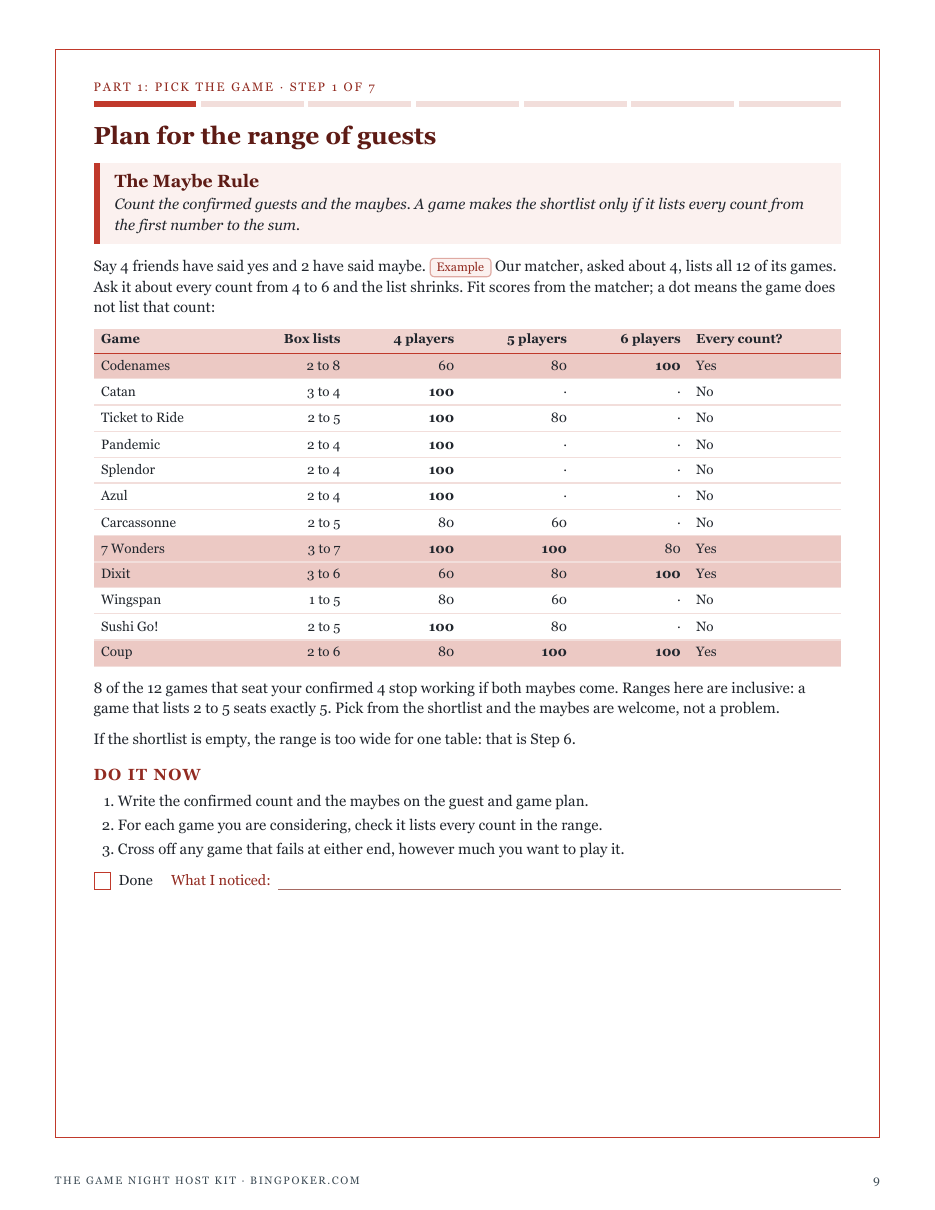
What is in it
- The Maybe Rule: keep only the games that list every count from the confirmed guests to the maybes
- The Worst Count Rule: rank the shortlist by its lowest fit score across the range, not its best
- The Long Figure Rule: turn a box's printed total into minutes a player, with the short figure as the floor
- The Teach Rule: plan the whole teach whenever anyone at the table is new
- The Last Game Rule: longest game first, and a game starts only if its whole slot fits before the stop time
- The Two Tables Rule: split a group too big for any game into two even tables with a teacher each
- The Plays Per Game Rule: count the plays a year your shelf really gets before the next purchase
- Printable guest and game plan and run sheet for each game night
- Printable game library sheet and teach cards
- Player count and box time reference, and a quickstart that closes the score loop
- ✓ 24 printable pages
- ✓ 10 sections, worksheets and templates
- ✓ A second PDF worked out from the numbers you enter
- ✓ No account needed, just an email address
- ✓ Instant download; link valid 7 days
Price includes any taxes. Sold by GrabURL, who handle checkout and support. The charge appears on your statement as GrabURL.
The kit picks up where the free Player-Count Matcher leaves off. The matcher answers one headcount; the kit plans for the confirmed guests and the maybes together and ranks the games that survive by their worst count. It turns a box’s printed total into the per-player time the Game-Length Estimator needs, fits the games into your evening longest first, splits a big group into two tables with the Team Balancer, and counts how often each game on the shelf the Collection Organizer measures actually gets played. The Game-Night Planning Reference shows the same games by headcount. It is for social game nights: no betting or money play.