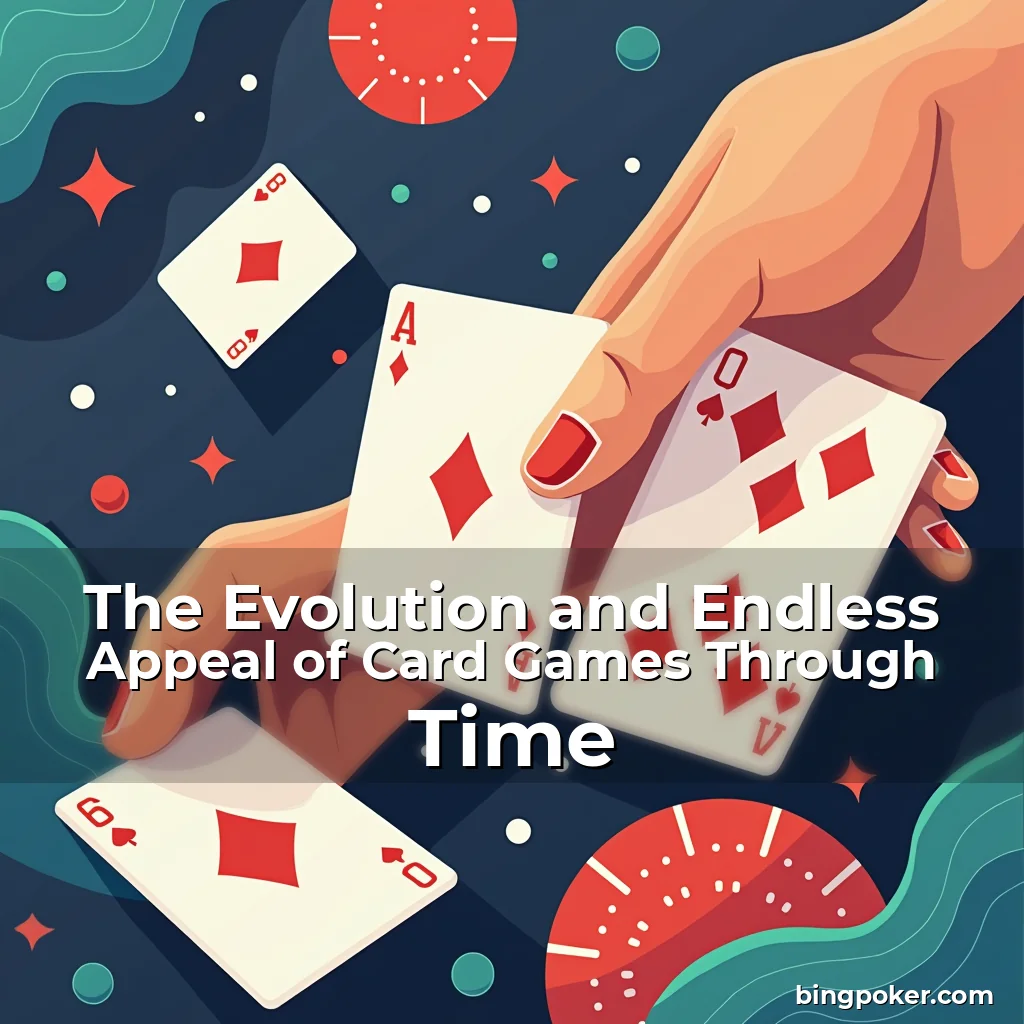
The Evolution and Endless Appeal of Card Games Through Time
In an age dominated by digital entertainment and high-speed internet, the timeless charm of card games continues to captivate minds across generations. From the royal courts of Europe to modern-day poker rooms and online platforms, these games have evolved while retaining their core essence—strategic play, social interaction, and the thrill of uncertainty.
Card games are not merely pastimes; they are cultural artifacts that reflect societal values, technological advancements, and human psychology over centuries. Whether played for fun, competition, or even as part of professional tournaments, cards hold a unique place in both history and contemporary life.
The Origins of Playing Cards and Their Cultural Significance
The origins of playing cards can be traced back to ancient China around AD 9th century during the Tang Dynasty. It is believed that early forms of paper-based game cards were used for divination purposes before evolving into recreational tools. This Chinese innovation eventually made its way westward through trade routes such as the Silk Road.
By the late 14th century, European societies had adopted and adapted these Asian imports into their own versions of card games. French and Italian merchants played pivotal roles in spreading knowledge about card design and gameplay mechanics across different regions. These early decks typically contained suits representing various aspects of feudal society—clubs for peasants, spades for soldiers, hearts for clergy, and diamonds for nobility.
Cultural symbolism embedded within traditional deck designs:
- Suits and symbols often reflected class structures prevalent at the time;
- Different countries developed distinct styles based on local customs;
- French suits became dominant globally due to colonial influence from France;
- Chinese jokers introduced whimsy elements absent in Western decks initially;
Classifying Different Types of Card Games Based on Mechanics
Card games fall broadly into three categories according to their primary ruleset and objectives: trick-taking games, shedding games, and gambling/lottery-style games. Trick-taking involves players trying to win tricks (sets) using predetermined rules about which cards beat others.
Shedding games require participants to get rid of all their cards first by following suit or playing special cards when unable to follow. Gambling-style games usually involve betting real money where skill plays against chance factors like shuffling randomness and dealing patterns.
Examples illustrating each category’s characteristics:
- Pinochle – classic example of a trick-taker with complex scoring system;
- Rummy – popular shedding type requiring pattern matching skills;
- Blackjack – casino staple combining probability calculations with risk management;
Historical Milestones That Shaped Modern Card Gaming
The 18th and 19th centuries marked significant developments in standardizing card formats worldwide. In particular, the invention of mass production techniques allowed wider distribution of uniform quality decks suitable for serious play rather than mere novelty items.
This era also witnessed the rise of organized clubs dedicated solely to card gaming activities. London’s Whitechapel Club established itself as one notable institution promoting gentlemanly pursuit of strategic board/card games alongside other intellectual pursuits.
Technological advances influencing game development:
- Mechanical printing presses enabled consistent card sizing and image clarity;
- Introduction of plastic-coated cardboard improved durability significantly;
- Digital simulations began experimenting with virtual environments post-1990s;
How Card Games Foster Social Interaction and Cognitive Skills
Beyond simple recreation value, card games serve crucial functions in developing interpersonal relationships and mental agility among players. They provide structured yet flexible opportunities for people from diverse backgrounds to engage meaningfully without excessive physical exertion required by sports.
Studies indicate regular participation in tactical card games enhances memory retention capabilities, decision-making speed under pressure conditions, and emotional regulation strategies useful beyond tabletop scenarios. Families often use them as bonding experiences across generational divides.
Educational benefits observed through empirical research:
- Children exposed to frequent family card nights show better academic performance metrics;
- Adult learners benefit from improved concentration spans after regular practice sessions;
- Senior citizens maintain cognitive sharpness longer via continued engagement;
Popular Card Game Variants Across Cultures Today
While many global communities share common favorites like bridge or Texas Hold’em, regional variations showcase rich diversity reflecting localized traditions and preferences. For instance, Japanese culture has embraced mahjong deeply despite its tile-based nature being technically distinct from pure card games.
India hosts numerous indigenous variants including Rummy adaptations tailored specifically towards Indian audiences considering language nuances and familial dynamics typical there. Similarly, African nations preserve ancestral games passed down orally through generations.
Cross-cultural comparisons highlighting unique features:
- Spanish Escoba emphasizes quick reflexes unlike slower paced Eurogames;
- Australian Two-Up introduces coin-flipping element blending luck with strategy;
- Korean Fan-Tan demonstrates intricate mathematical principles behind seemingly random outcomes;
Tips for Becoming Proficient At Any Given Card Game Style
To excel at any form of competitive or casual card gaming requires dedication similar to mastering musical instruments or athletic disciplines. Beginners should start by thoroughly understanding basic rule sets before attempting advanced tactics meant only for experienced players.
Consistent practice remains essential regardless of chosen genre whether focusing purely on memorization drills or studying opponent behaviors during live matches. Observant individuals who analyze patterns emerging from repeated encounters tend to outperform those relying strictly upon instinct alone.
Strategies applicable universally across most genres:
- Keep track of discarded cards to anticipate future moves accurately;
- Balance aggression levels appropriately depending on current hand strength;
- Learn tells exhibited by opponents indicating potential weaknesses;
Emerging Trends And Innovations Within Contemporary Card Gaming Scenes
Modern technology integration presents exciting new dimensions expanding possibilities once thought impossible within conventional settings. Virtual reality headsets now allow immersive multiplayer experiences replicating real-world interactions digitally albeit remotely located players involved simultaneously.
Augmented reality applications overlay additional layers onto physical cards enabling interactive storytelling components previously limited exclusively to video games consoles or mobile devices. These innovations attract younger demographics seeking novel ways to connect socially amidst rapidly changing communication landscapes.
Notable examples showcasing cutting-edge approaches:
- HoloCards utilizing holographic projections create dynamic visual effects;
- AI-powered assistants offering personalized training regimens tailored individually;
- Blockchain implementations ensuring transparent record keeping for tournament results;
The Role Of Professional Leagues & Tournaments In Elevating Card Gaming Status
Organized competitions featuring top-tier professionals help legitimize card games as legitimate sporting events worthy of media coverage comparable to traditional athletics fields. Major leagues establish standardized regulations governing everything from eligibility criteria to prize pool allocations.
These institutions also invest heavily in infrastructure improvements such as state-of-the-art facilities equipped with climate control systems maintaining optimal humidity levels preventing damage risks associated with prolonged exposure periods affecting delicate materials used extensively within equipment supplies.
Impactful events shaping public perception positively:
- World Series Of Poker consistently draws millions tuning in annually;
- European Bridge Championships promote intellectual rigor synonymous with elite scholarship;
- Asian Mahjong Grand Prix celebrates heritage while embracing modernity seamlessly;
Conclusion
From humble beginnings rooted firmly within historical contexts spanning continents and millennia, card games remain vibrant testaments celebrating enduring human fascination with calculated risks intertwined naturally within communal bonds formed through shared enjoyment.
Whether pursued casually among friends or competitively at world-class venues, engaging regularly with well-designed card products offers unmatched rewards enhancing personal growth trajectories simultaneously strengthening connections built upon mutual respect earned fairly during fair contests governed objectively by agreed-upon parameters.
“`html
“`
The Evolution and Endless Appeal of Card Games Through Time
In an age dominated by digital entertainment and high-speed internet, the timeless charm of card games continues to captivate minds across generations. From the royal courts of Europe to modern-day poker rooms and online platforms, these games have evolved while retaining their core essence—strategic play, social interaction, and the thrill of uncertainty.
Card games are not merely pastimes; they are cultural artifacts that reflect societal values, technological advancements, and human psychology over centuries. Whether played for fun, competition, or even as part of professional tournaments, cards hold a unique place in both history and contemporary life.
The Origins of Playing Cards and Their Cultural Significance
The origins of playing cards can be traced back to ancient China around AD 9th century during the Tang Dynasty. It is believed that early forms of paper-based game cards were used for divination purposes before evolving into recreational tools. This Chinese innovation eventually made its way westward through trade routes such as the Silk Road.
By the late 14th century, European societies had adopted and adapted these Asian imports into their own versions of card games. French and Italian merchants played pivotal roles in spreading knowledge about card design and gameplay mechanics across different regions. These early decks typically contained suits representing various aspects of feudal society—clubs for peasants, spades for soldiers, hearts for clergy, and diamonds for nobility.
Cultural symbolism embedded within traditional deck designs:
- Suits and symbols often reflected class structures prevalent at the time;
- Different countries developed distinct styles based on local customs;
- French suits became dominant globally due to colonial influence from France;
- Chinese jokers introduced whimsy elements absent in Western decks initially;
Classifying Different Types of Card Games Based on Mechanics
Card games fall broadly into three categories according to their primary ruleset and objectives: trick-taking games, shedding games, and gambling/lottery-style games. Trick-taking involves players trying to win tricks (sets) using predetermined rules about which cards beat others.
Shedding games require participants to get rid of all their cards first by following suit or playing special cards when unable to follow. Gambling-style games usually involve betting real money where skill plays against chance factors like shuffling randomness and dealing patterns.
Examples illustrating each category’s characteristics:
- Pinochle – classic example of a trick-taker with complex scoring system;
- Rummy – popular shedding type requiring pattern matching skills;
- Blackjack – casino staple combining probability calculations with risk management;
Historical Milestones That Shaped Modern Card Gaming
The 18th and 19th centuries marked significant developments in standardizing card formats worldwide. In particular, the invention of mass production techniques allowed wider distribution of uniform quality decks suitable for serious play rather than mere novelty items.
This era also witnessed the rise of organized clubs dedicated solely to card gaming activities. London’s Whitechapel Club established itself as one notable institution promoting gentlemanly pursuit of strategic board/card games alongside other intellectual pursuits.
Technological advances influencing game development:
- Mechanical printing presses enabled consistent card sizing and image clarity;
- Introduction of plastic-coated cardboard improved durability significantly;
- Digital simulations began experimenting with virtual environments post-1990s;
How Card Games Foster Social Interaction and Cognitive Skills
Beyond simple recreation value, card games serve crucial functions in developing interpersonal relationships and mental agility among players. They provide structured yet flexible opportunities for people from diverse backgrounds to engage meaningfully without excessive physical exertion required by sports.
Studies indicate regular participation in tactical card games enhances memory retention capabilities, decision-making speed under pressure conditions, and emotional regulation strategies useful beyond tabletop scenarios. Families often use them as bonding experiences across generational divides.
Educational benefits observed through empirical research:
- Children exposed to frequent family card nights show better academic performance metrics;
- Adult learners benefit from improved concentration spans after regular practice sessions;
- Senior citizens maintain cognitive sharpness longer via continued engagement;
Popular Card Game Variants Across Cultures Today
While many global communities share common favorites like bridge or Texas Hold’em, regional variations showcase rich diversity reflecting localized traditions and preferences. For instance, Japanese culture has embraced mahjong deeply despite its tile-based nature being technically distinct from pure card games.
India hosts numerous indigenous variants including Rummy adaptations tailored specifically towards Indian audiences considering language nuances and familial dynamics typical there. Similarly, African nations preserve ancestral games passed down orally through generations.
Cross-cultural comparisons highlighting unique features:
- Spanish Escoba emphasizes quick reflexes unlike slower paced Eurogames;
- Australian Two-Up introduces coin-flipping element blending luck with strategy;
- Korean Fan-Tan demonstrates intricate mathematical principles behind seemingly random outcomes;
Tips for Becoming Proficient At Any Given Card Game Style
To excel at any form of competitive or casual card gaming requires dedication similar to mastering musical instruments or athletic disciplines. Beginners should start by thoroughly understanding basic rule sets before attempting advanced tactics meant only for experienced players.
Consistent practice remains essential regardless of chosen genre whether focusing purely on memorization drills or studying opponent behaviors during live matches. Observant individuals who analyze patterns emerging from repeated encounters tend to outperform those relying strictly upon instinct alone.
Strategies applicable universally across most genres:
- Keep track of discarded cards to anticipate future moves accurately;
- Balance aggression levels appropriately depending on current hand strength;
- Learn tells exhibited by opponents indicating potential weaknesses;
Emerging Trends And Innovations Within Contemporary Card Gaming Scenes
Modern technology integration presents exciting new dimensions expanding possibilities once thought impossible within conventional settings. Virtual reality headsets now allow immersive multiplayer experiences replicating real-world interactions digitally albeit remotely located players involved simultaneously.
Augmented reality applications overlay additional layers onto physical cards enabling interactive storytelling components previously limited exclusively to video games consoles or mobile devices. These innovations attract younger demographics seeking novel ways to connect socially amidst rapidly changing communication landscapes.
Notable examples showcasing cutting-edge approaches:
- HoloCards utilizing holographic projections create dynamic visual effects;
- AI-powered assistants offering personalized training regimens tailored individually;
- Blockchain implementations ensuring transparent record keeping for tournament results;
The Role Of Professional Leagues & Tournaments In Elevating Card Gaming Status
Organized competitions featuring top-tier professionals help legitimize card games as legitimate sporting events worthy of media coverage comparable to traditional athletics fields. Major leagues establish standardized regulations governing everything from eligibility criteria to prize pool allocations.
These institutions also invest heavily in infrastructure improvements such as state-of-the-art facilities equipped with climate control systems maintaining optimal humidity levels preventing damage risks associated with prolonged exposure periods affecting delicate materials used extensively within equipment supplies.
Impactful events shaping public perception positively:
- World Series Of Poker consistently draws millions tuning in annually;
- European Bridge Championships promote intellectual rigor synonymous with elite scholarship;
- Asian Mahjong Grand Prix celebrates heritage while embracing modernity seamlessly;
Conclusion
From humble beginnings rooted firmly within historical contexts spanning continents and millennia, card games remain vibrant testaments celebrating enduring human fascination with calculated risks intertwined naturally within communal bonds formed through shared enjoyment.
Whether pursued casually among friends or competitively at world-class venues, engaging regularly with well-designed card products offers unmatched rewards enhancing personal growth trajectories simultaneously strengthening connections built upon mutual respect earned fairly during fair contests governed objectively by agreed-upon parameters.
“`html
“`

news is a contributor at BingPoker. We are committed to providing well-researched, accurate, and valuable content to our readers.